

About
Founded in 2004 by Jeffrey Lewis, Arms Control Wonk was the first blog on arms control, disarmament and nonproliferation. It began as an outlet for writing that was “too wonky or obscene” for publication. The blog grew into a collaboration that, over the next twenty years, has seen 42 experts write 3,739 articles. ACW is now also home to a podcast with a ten-year history and 326 episodes.
History
-
2004
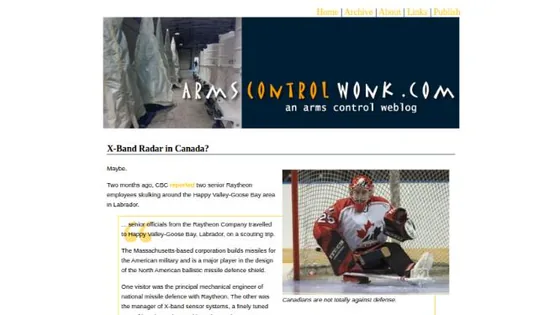
Jeffrey Lewis starts the blog with its first post, US Torpedoes the CD. The site is a gift from his college roommate, Greg, who has built every version since.
-
2005
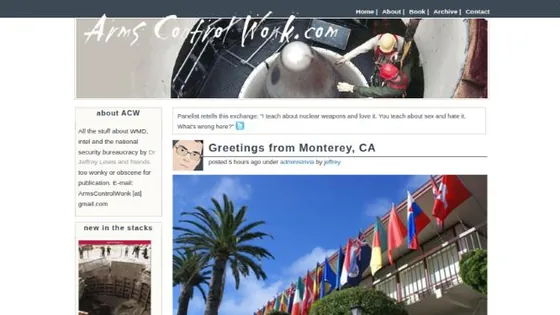
Version 2 puts Paul Shambroom’s photograph of a Peacekeeper missile silo in the banner. Guest bloggers start filling in, beginning with Stephen Young of the Union of Concerned Scientists.
- 2008 Regular co-bloggers join: James Acton, Joshua Pollack, Geoff Forden and Michael Krepon (2009). In Washington, readers meet the writers at happy hours at the Big Hunt.
-
2010
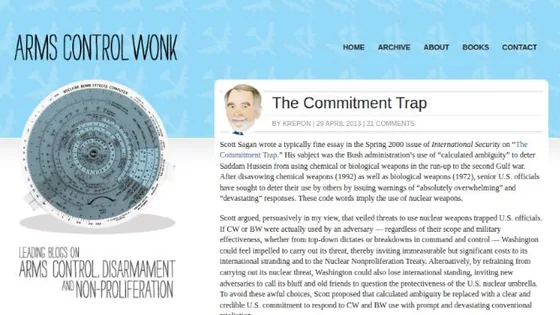
Version 3 transforms one blog into a group of blogs, each writer with their own. Mark Hibbs joins soon after.
- 2014 The podcast begins, with Jeffrey Lewis and Aaron Stein. Aaron, in Geneva, records the first episodes by pointing a speaker at his laptop’s microphone. The first: The INF and the Dismemberment of Ukraine.
-
2015
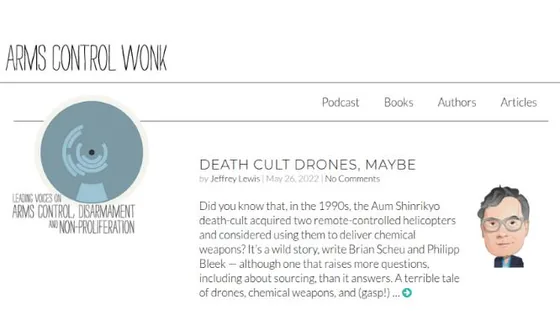
Version 4: the blogs become one site again, with author pages, a site-wide search that works, a responsive layout and a new logo by Craig Robinson.
- 2017 North Korea is in the news every day. This American Life does a story (another site) on the podcast, and Vice films a pilot for an HBO show that never airs.
- 2021 Decker Eveleth finds 120 missile silos under construction in the Chinese desert.
- 2022 Hours before Russia invades Ukraine, Jeffrey Lewis and his students spot a traffic jam (another site) on Google Maps: Russian armor on the road from Belgorod to the border.
-
2026
Version 5 brings podcast theme curation and transcripts, article collections and a back-to-black (blue) visual redesign.
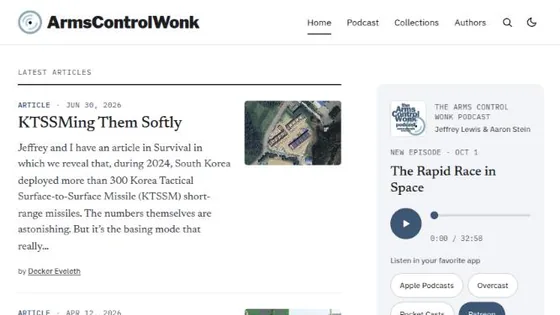
- Now Writing in the last year: Decker Eveleth, Jeffrey Lewis, Sam Lair and John Ford.
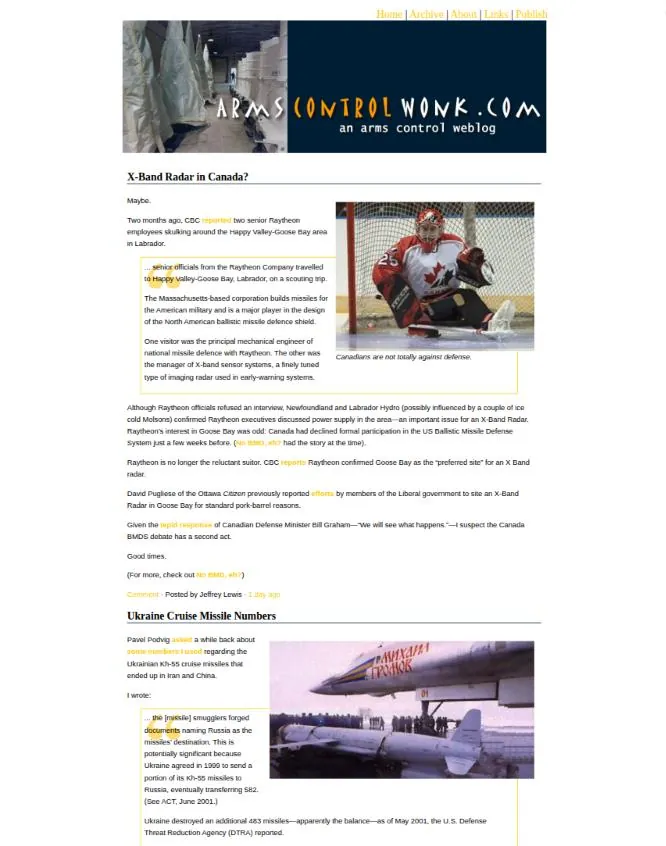
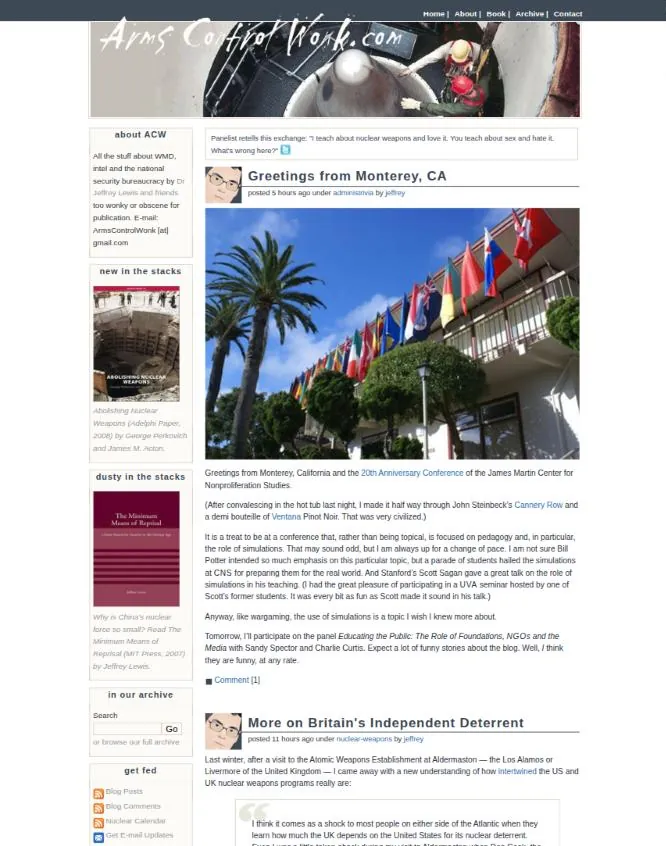
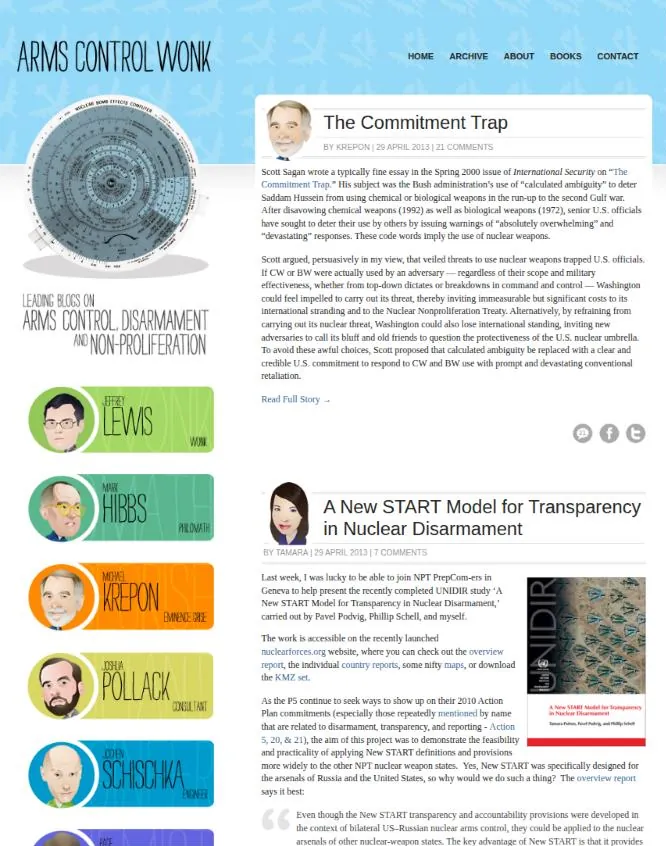
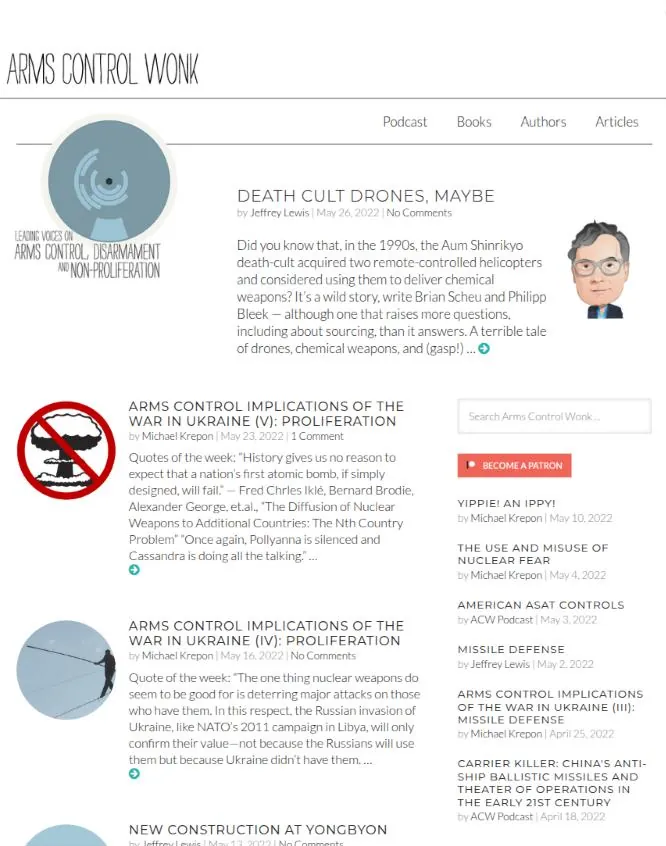
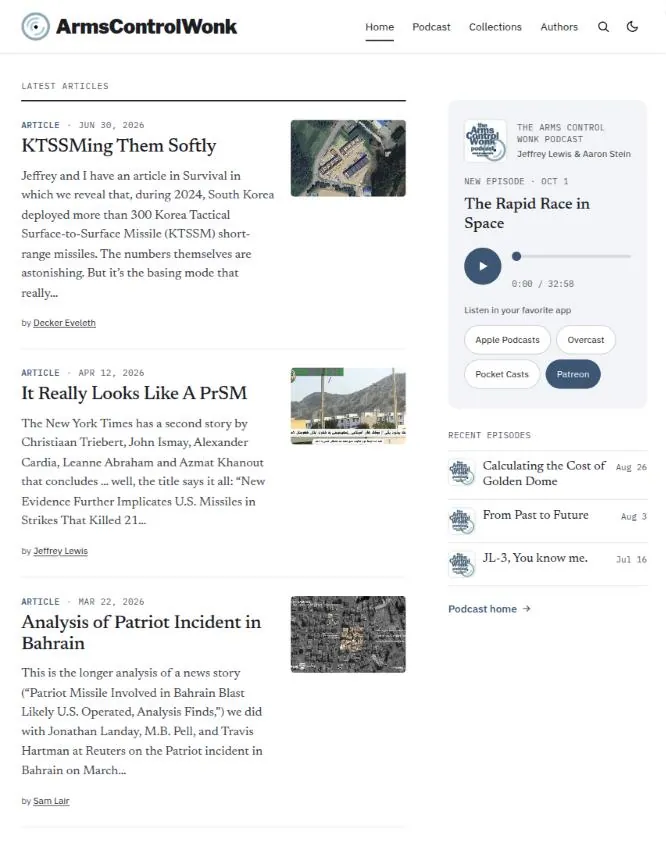
Screenshots of the front page from the Internet Archive’s Wayback Machine.